

Cart
    Elkay Pro Filtration Bottle Filling Station in Black

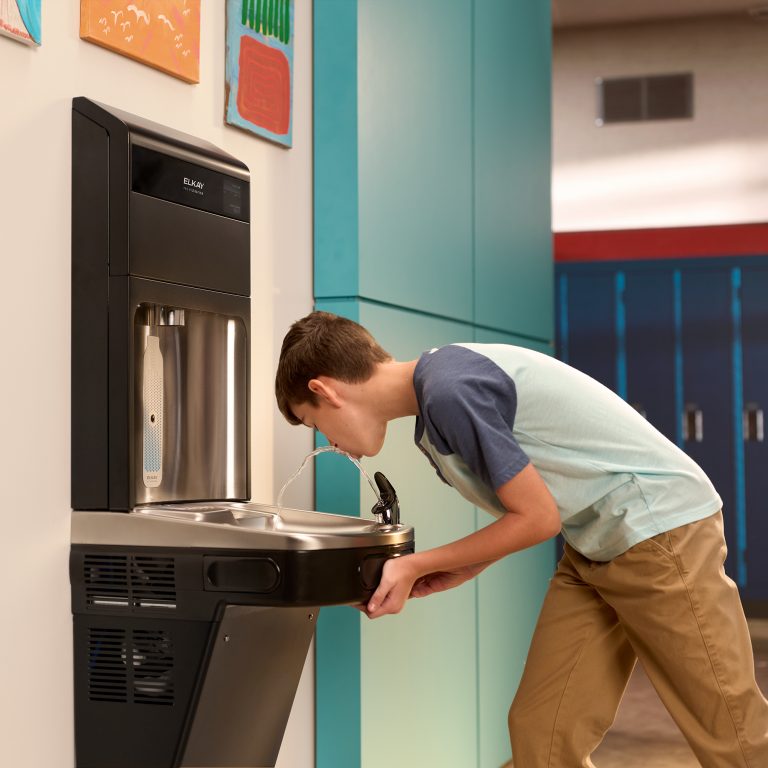
    Your Child's School Has a Water Fountain. But Is It Actually Filtering Anything?

    By Krystal Pesch, Senior Director, Portfolio Management, Zurn Elkay

    I'll be honest. For years, I assumed my kids' school had it handled. Renovated building. Clean hallways. Nice water fountains. Surely someone was making sure the water was safe, right? Then I started working in drinking water, and what I learned changed how I think about every single sip my kids take at school.


    The Uncomfortable Truth About School Water Fountains

    Most schools have water fountains. Far fewer have water filters.

    There's a difference, and it's a big one.

    An unfiltered fountain dispenses whatever comes out of the municipal line, through aging building infrastructure, right to your kid. Lead. PFAS. Microplastics. Chlorine byproducts. Depending on your district's pipes and how old the building is, that "clean" water may be carrying things you can't see, taste, or smell.

    The EPA's own data shows that lead contamination in school drinking water remains widespread across the U.S. PFAS (the "forever chemicals" linked to immune disruption and developmental issues in children) are showing up in water systems at alarming rates.

    Here's what most parents don't know: schools typically rely on the city's water quality report — which tests water before it ever enters the building. It says nothing about what's happening inside aging pipes and fixtures between the street and your kid's water fountain.


    So How Do You Know If Your School's Fountain Is Actually Filtering?

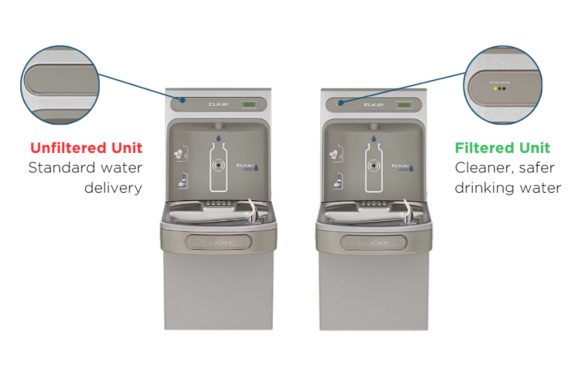
    Look for the lights.

    Certified filtered water stations, the kind that actually remove lead, PFAS, and other contaminants to NSF/ANSI standards, have an indicator light that tells you the filter is active and working. It's a small thing. But it's the difference between a fountain and a filter.


    No light? It's probably not filtering.

    NSF 53 and NSF 58 certifications are the benchmarks that matter. They mean a filter has been independently tested and verified to reduce specific contaminants, not just improve taste. If your school's fountains don't carry those certifications, they may be doing nothing more than chilling the water.


    Why This Isn't Getting More Attention

    Because it's not dramatic. There's not always a visible crisis. Kids aren't getting sick in ways anyone can immediately trace back to a water fountain.

    But the research on long-term, low-level lead exposure in children is unambiguous: there is no safe level. Even small amounts affect cognitive development, behavior, and learning.

    The schools that have upgraded to certified filtered stations aren't making headlines. They're just quietly protecting kids. And the districts that haven't? Most of them don't even know they're behind.


    Three Things You Can Do This Week

    You don't need to wait for a district initiative or a line item in next year's budget. Start here:

    1. Send your principal a quick email this week:  “I've been reading about school water quality and wanted to ask: do our drinking water stations have certified filtration installed? And do you know when the filters were last changed?"

    Two sentences. That's it. Most principals will loop in their facilities team to get you an answer, and now the conversation has started.

    2. Bring it to your next PTA meeting. Water quality rarely comes up until there's a problem. Put it on the agenda. Share this article. Ask whether it's been discussed at the district level. Parent voices move school boards.

    3. Look for the light. Next time you're at school pickup or walking the hallways, take a look at the water stations. Is there a filter indicator light? Is it on? One look is all it takes to know whether your school is protected or not.


    This Is Solvable

    Unlike a lot of issues facing schools right now, this one has a clear answer. The technology exists. The certifications exist. The funding, through federal infrastructure dollars and state programs, exists more than ever.

    What's missing in most districts is the parent push to make it a priority.

    You're the push.

    Want to take action in your district? Visit our Look for the Lights Advocacy Page and find out how other parents are making filtered water a school standard, not an exception.


    About the Author

    As Senior Director of Portfolio Management, Krystal Pesch leads strategic initiatives that drive growth, revenue optimization, and market expansion across Zurn Elkay’s diverse product portfolio. With deep experience in B2B marketing and strategic planning within industrial and plumbing manufacturing, she has a proven ability to translate market insights into measurable business results. Krystal is known for her collaborative leadership style, uniting cross-functional teams around customer-focused solutions that strengthen Zurn Elkay’s competitive position. She is also a committed advocate for elevating women in manufacturing and expanding pathways to leadership.

    Expertise & Media Topics:

    • Portfolio strategy and business growth
    • B2B marketing and go-to-market excellence
    • Industrial and plumbing manufacturing trends
    • Cross-functional leadership and team alignment
    • Advancing women in manufacturing and leadership roles