




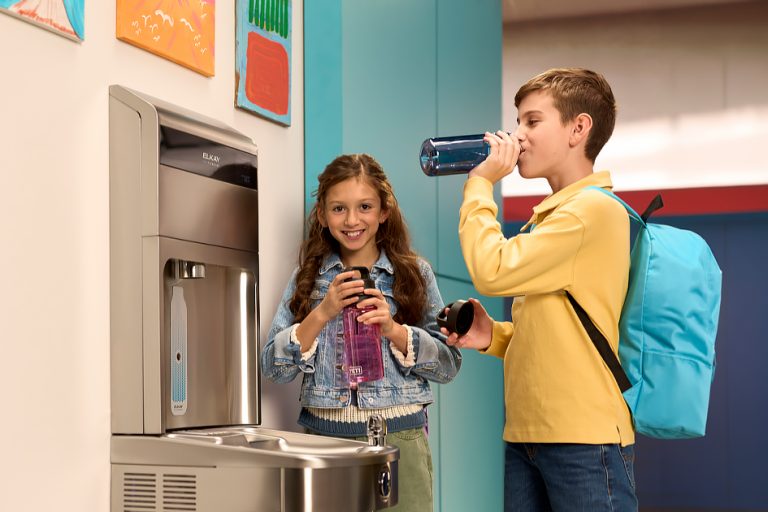
Access to cleaner, safer drinking water is an important part of a healthy school environment. From hallways and cafeterias to gymnasiums and common areas, students rely on drinking fountains and bottle filling stations to stay hydrated throughout the day.
As schools continue modernizing facilities and installing bottle filling stations, many parents and community members are becoming more interested in understanding how school drinking water systems work.
If you’re curious about drinking water at your local school, asking a few simple questions can help provide clarity and peace of mind.
Where do students typically get drinking water during the school day?
Most schools provide drinking water through a combination of traditional drinking fountains and bottle filling stations. Bottle filling stations have become increasingly popular because they allow students to refill reusable bottles quickly and easily.
Understanding where students most commonly access drinking water—such as hallways, cafeterias, or athletic areas—can provide helpful context when discussing hydration and access.
Do the bottle filling stations include filtration?
A common assumption is that all bottle filling stations include a filter. In reality, some units include built-in filtration while others dispense water directly from the building’s plumbing system.
Because filtered and unfiltered units often look very similar, it can sometimes be difficult to tell the difference without checking the unit itself. Asking whether bottle filling stations include filtration can help clarify how the system is designed.
How are filters monitored and replaced?
For systems that include filtration, filters must be replaced periodically to maintain performance.
Many modern bottle filling stations include filter indicator lights that alert facility managers when the filter is nearing the end of its life. Maintenance teams typically monitor these indicators and replace filters as needed. Understanding how filters are monitored and maintained can help provide confidence that the systems are operating as intended.
How are drinking water systems maintained?
School facility managers play an important role in maintaining drinking water systems. Routine maintenance may include:
- Monitoring equipment performance
- Replacing filters when required
- Inspecting fountains and bottle filling stations
- Responding to maintenance requests
These steps help ensure that drinking water systems continue operating safely and reliably.
Who manages drinking water systems in the school district?
In most school districts, facility or maintenance teams are responsible for the upkeep of drinking water systems. These teams often work closely with district administrators to ensure equipment is functioning properly and meeting applicable guidelines.
If parents have questions, school administrators or facility managers can often provide additional information about how drinking water systems are maintained.
Supporting healthy hydration
Easy access to drinking water helps students stay hydrated throughout the school day. Hydration supports concentration, physical activity, and overall well-being. By understanding how drinking water systems work and how they are maintained, parents and communities can feel more informed and confident about the water students rely on every day.