By Tanner Mascarenas, Product Marketing Manager for Commercial Drinking Water, Zurn Elkay
Architects and designers have long understood that specifications shape performance - from energy & water efficiency to health & safety for those utilizing built spaces. Increasingly, that responsibility extends to drinking water. The decisions made at the product selection stage directly determine whether occupants receive safe, high-quality water - or are unknowingly exposed to contaminants.
Today, most buildings still deliver unfiltered water, and it is the result of what is (and isn’t) specified.
Specifications Define Outcomes
Across the U.S., many municipalities meet strict regulatory standards, and it’s common to hear: “My city has safe water.” At the treatment plant, that’s often true, not at the water source. Widespread exposure to contaminants such as lead, PFAS, and microplastics continue to raise concerns about the quality of drinking water delivered inside buildings.
- More than 47 million children are exposed to lead in water daily
- PFAS have been detected in the blood of 99% of Americans
The distribution system can reintroduce contaminants.
As water travels through aging underground pipes, it can pick up materials like lead and other debris, especially in cities with older service lines or plumbing.
Building plumbing creates additional risk.
Once inside a building, water moves through internal systems that are rarely monitored as closely as municipal infrastructure. Stagnation, outdated fixtures, and certain piping materials can contribute to:
- Lead and other metals
- Microplastics from plastic components
- Bacterial growth in low-use areas
The “last mile” is largely untested.
Water is typically tested at centralized points, not at every faucet or fountain. This means contaminants introduced within buildings often go undetected.
A gap in specification, not intent.
Utilities may deliver compliant water, but without intentional building-level design, like filtration, monitoring, and material selection, quality can degrade before the point of use.
In practice, this means a school, office, or hospital in a “safe water” city can still expose occupants to contaminants, not because treatment failed, but because infrastructure along the way reintroduced them.
Invisible Contaminants, Real-World Impact
Unlike other building system risks, water contaminants are often invisible. Many occupants are unaware that they may be drinking unfiltered basic tap water. And many architects and engineers assume all bottle fillers are filtered when making product selections.
Lead exposure has no safe threshold and is linked to irreversible developmental impacts. PFAS - often referred to as “forever chemicals” - persist in the human body and have been associated with cancer and hormonal disruption. Microplastics, now found in human blood and organs, represent an emerging and still-evolving health concern.
Despite this, point-of-use filtration is still not standard in many project specifications.
Regulation Is already reshaping design requirements.
Drinking water quality is no longer a future concern, it is an active regulatory focus. Across the U.S., more than 100 state and federal bills are addressing water safety, with over 30 states advancing new requirements.
Programs like Michigan’s “Filter First” legislation are establishing a clear precedent:
- Mandatory filtered bottle filling stations in schools
- Defined ratios of units per occupants
- Required filter maintenance documentation
- Ongoing water quality testing
For architects, this signals a shift. Specifying unfiltered systems today may result in costly retrofits tomorrow, often under compressed timelines and increased scrutiny.
The Hidden Cost of Specifying Unfiltered
Liability Risk
As regulations tighten, previously acceptable systems can quickly become non-compliant. Specifications may be revisited years later under legal or regulatory pressure.
Financial Risk
Retrofitting drinking water systems after occupancy can cost three to five times more than incorporating filtration during initial construction.
Reputational Risk
Water quality issues can escalate quickly in the public eye. A single incident shared through social media or news coverage can have lasting implications for a building, institution, or brand.
Real-World Impacts of Delayed Action
Across the country, school districts and institutions have already experienced the consequences of unfiltered systems:
- Milwaukee Public Schools invested over $1.6 million in retrofits following lead contamination
- Houston ISD faced multi-million-dollar remediation after widespread testing failures
These are not isolated events, they represent a growing pattern tied directly to specification and standards decisions.
Occupant expectations are changing.
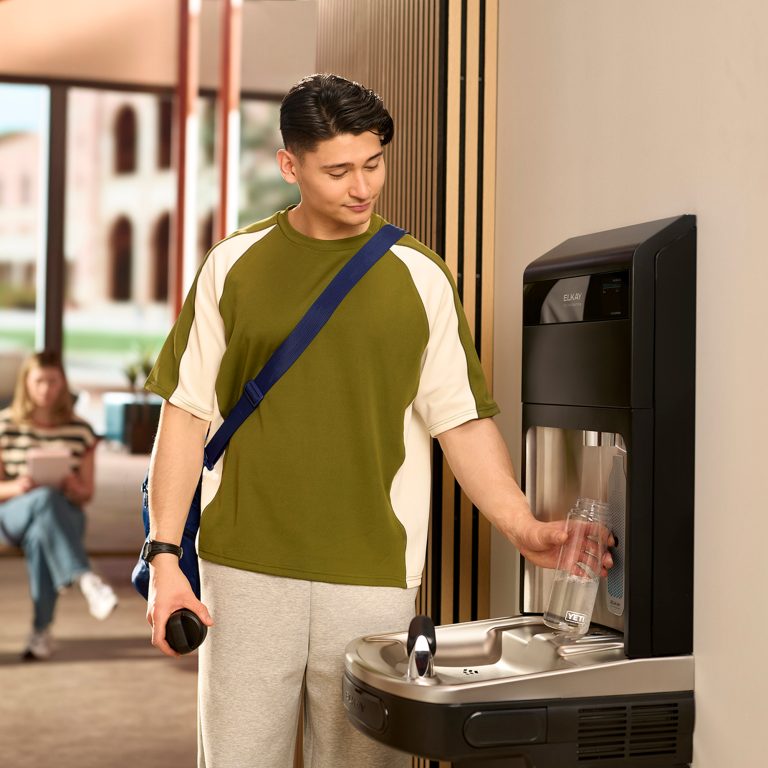
Bottle filling stations were first introduced about 15 years ago and there was no code mandates driving adoption - just architects and building owners recognizing the value for occupants. Today, filtration is following that same path: a proactive design choice driven by performance, health, and user expectations- not just compliance.
- Occupants expect bottle filling infrastructure
- Unfiltered fountains are often avoided altogether
- Wellness-focused design is now a competitive differentiator
For many users, particularly younger generations, filtered water is not optional. It is expected.
Designing for What’s Next
The trajectory of drinking water systems is moving toward higher filtration performance, easier maintenance, and smarter monitoring.
Advancements in filtration technology now enable:
- Reduction of lead, PFAS, and microplastics
- High-capacity filters that reduce maintenance frequency
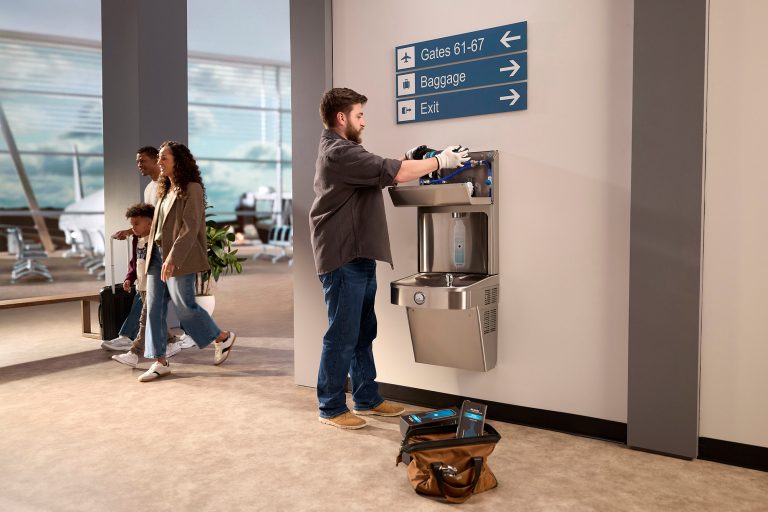
- Simplified service access that minimizes disruption
- Connected systems that allow real-time monitoring and preventative maintenance
These innovations are not just product improvements, they are enablers to make selections easier.